
Beyond Nostalgia: Heritage as Living Logic
Syria possesses one of the richest architectural legacies on earth, from ancient Roman colonnades and Byzantine stone masonry to the introverted sophistication of the Damascene courtyard house. Too often, contemporary engagement with this legacy degenerates into sentimental nostalgia—superficially replicating pointed arches, polychrome marble bands (ablaq), and decorative gypsum plaster on modern reinforced concrete skeletons.
This superficial historicism devalues both the past and the present. True respect for heritage demands understanding why historical builders made specific choices. Their forms were disciplined responses to materials, climate, seismic vulnerability, and social codes. When we strip away decorative surface treatments, we discover enduring tectonic principles: proportional harmony, disciplined massing, and masterful modulation of daylight.
The Spatial Sequence: Thresholds and Courtyards
The core lesson of the traditional Syrian house is the art of the threshold. One never stepped directly from the dusty, chaotic street into the family living quarters. Instead, an indirect dog-leg corridor (the broken axis or majaz) filtered outside noise, preserved visual modesty, and allowed the eye to adjust from blinding daylight to shaded tranquility.
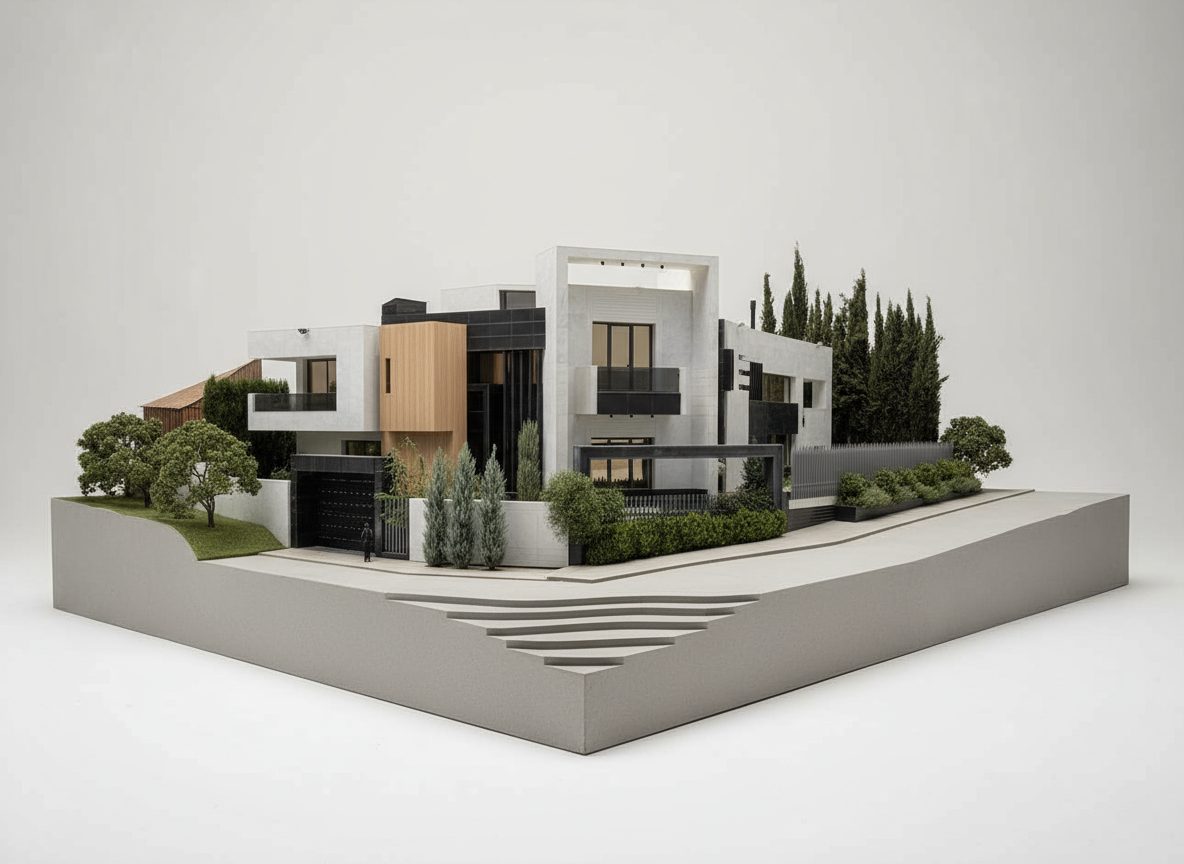
In our private residential work, such as Della Luna Villa and other bespoke estates in the Villas portfolio, this spatial sequencing is reinterpreted with crisp, contemporary minimalism. Linear water basins, textured stone boundary walls, and layered entrance canopies create modern thresholds that evoke the psychological transition of the traditional entrance without a single ornamental arch.
.png)
Urban Insertion: Bab Moussalla
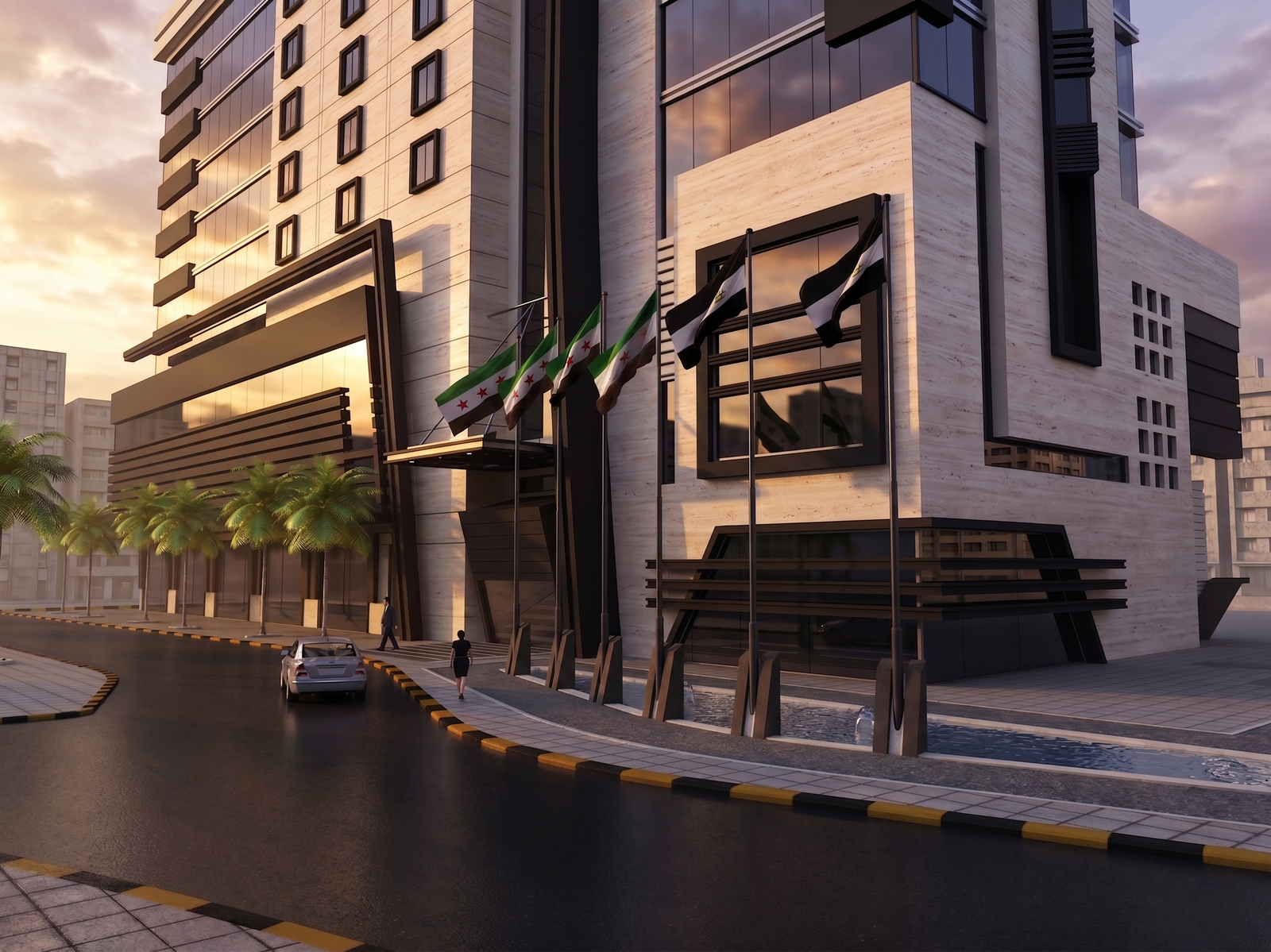
When designing within established quarters of the capital, such as our commercial and mixed-use project at Bab Moussalla, the street scale must be respected. By stepping back upper stories, matching the cornice datum of neighboring buildings, and using local stone facing, contemporary architecture reinforces the urban fabric rather than rupturing it.
To read more about historical integration in modern civic works, see Contemporary Architecture in Damascus: Designing Within a Layered City or examine the material articulation detailed in Façade Design in Damascus: Light, Depth and Architectural Identity.
Abstraction and Authenticity
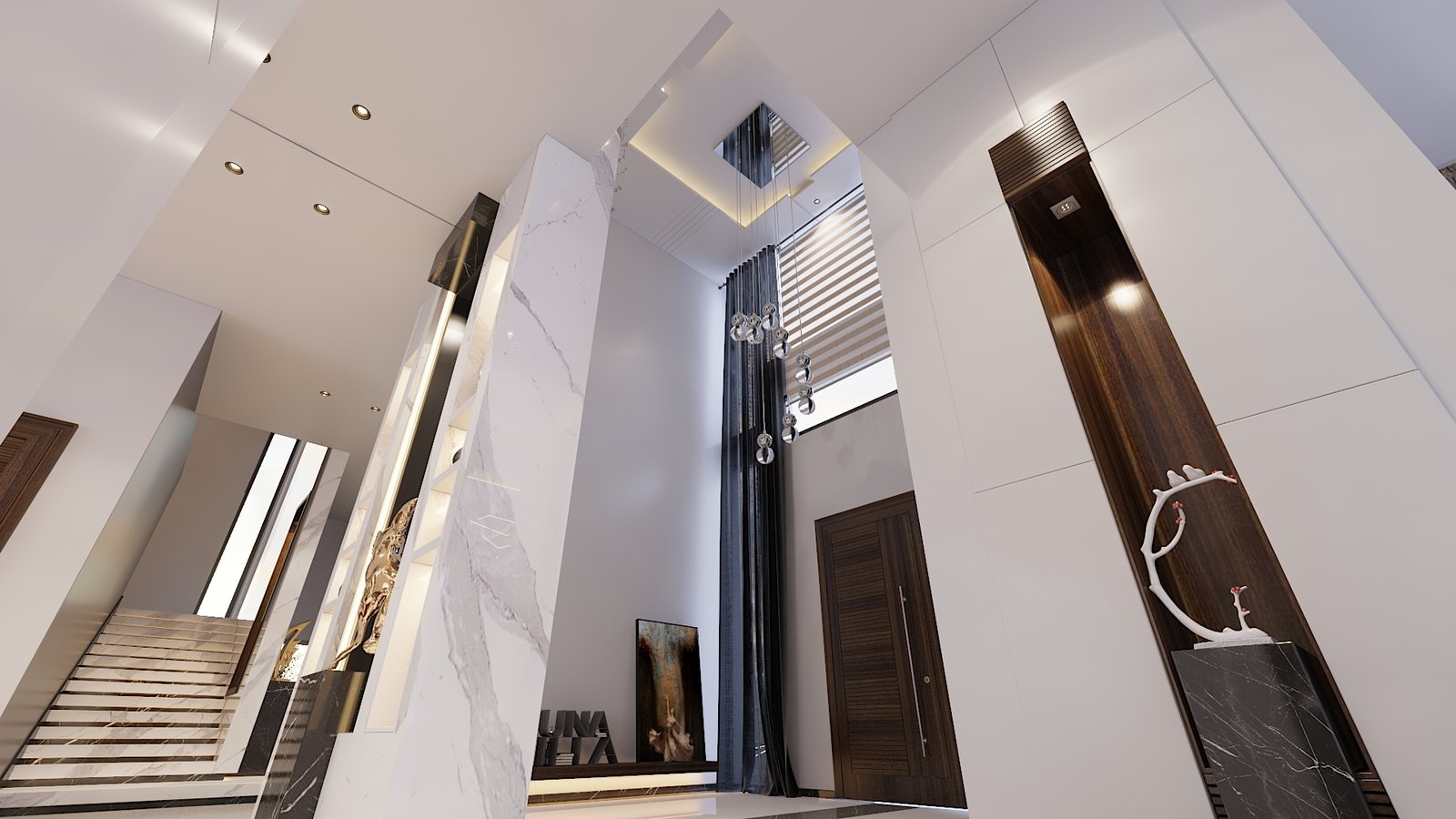
Contemporary Syrian architecture must be confident in its own time. By distilling heritage into its core geometric qualities—the golden ratio, the interplay of light and shade, and honesty of construction—we build landmarks that feel profoundly rooted in Syrian soil while addressing the technological demands of the twenty-first century.